Would You Get Inside a 3D Printed Diving Chamber?
Based on Episode 8 of the Beyond the Surface Podcast
Take a second with that question — because I know every diver reading this just had a gut reaction, and I’d bet it wasn’t entirely comfortable.
Here’s the thing though: somebody is building one right now in Bristol. And it’s already got full DNV approval of manufacture for pressure vessels for human occupancy.
In this post, we’re going to dig into what they’re building, how they’re building it, what that DNV approval actually means in the real world, and whether any of us should actually be comfortable getting inside one.
Humans Living Underwater: This Isn’t a New Idea
Before we get into what DEEP are building, it’s worth going back, because this idea of humans living and working underwater is not new — not by a long way.
Most people in the diving world will have heard of Jacques Cousteau, but what a lot of people don’t realise is that back in the early 1960s, Cousteau wasn’t just diving — he was putting divers on the seabed and leaving them there. His Conshelf programme (Continental Shelf Station) ran three missions between 1962 and 1965. Conshelf 2 had five men living on the floor of the Red Sea for a month. A month, in 1963, with the technology of the time.
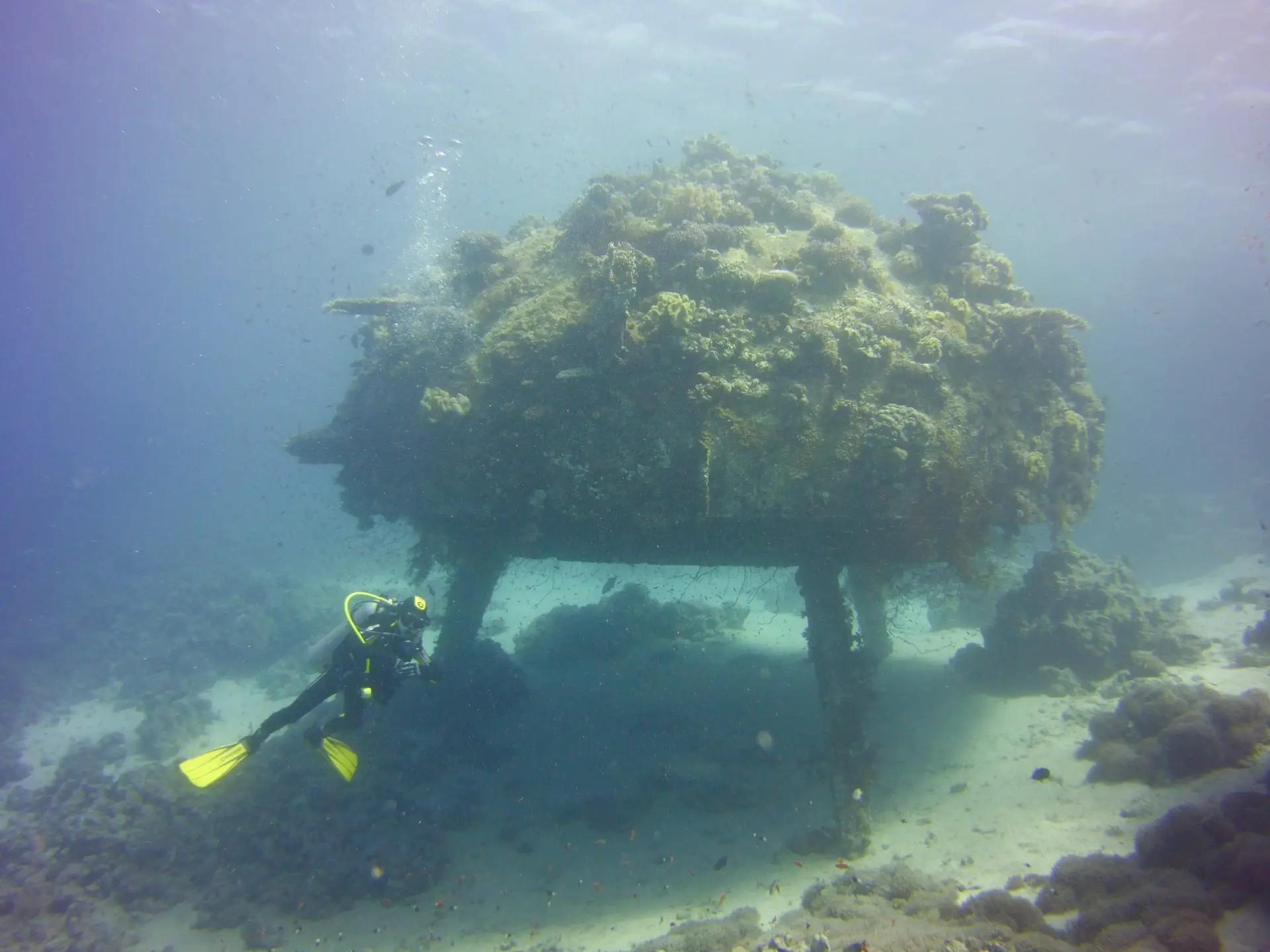
Around the same period, the US Navy were running their own programme called Sealab. Same concept — pushing the boundaries of how long humans could live and work at depth. Sealab 2 in 1965 had teams of divers living at 60 metres for 15-day rotations off the coast of California.
And then there’s Aquarius — which is still out there right now, sitting in about 19 metres of water off the Florida Keys. It’s been operating since 1993. NASA use it to train astronauts because the environment — the isolation, the life support dependency, the crew dynamics — is one of the closest things to space we have on Earth.
The dream of permanent human presence underwater has been alive for over 60 years.
Who Are DEEP and Where Do They Come From?
The first thing to understand is that DEEP are not a diving company. They’re an ocean engineering company with a very bold vision: a permanent human presence under the ocean, and a global network of subsea habitats.
The man leading the technical side is their Chief Technology Officer, Norman Smith — and his background is worth noting. Before DEEP, he was designing hardware for NASA manned spaceflight programmes. So when they talk about engineering rigour, that’s not marketing language. That’s the pedigree of the people in the room.
DEEP operates as two connected arms: DEEP the habitat company (the vision and the product), and DEEP Manufacturing — the facility in Avonmouth, Bristol, that’s actually making the components. Their campus is based in Chepstow, just over the border in Wales.
One thing that tells you a lot about this company: they didn’t go out and find a manufacturer who could build what they needed. They looked at what was available, decided nobody could do it to the standard and scale they required, and built the manufacturing capability themselves. That’s not a small company cutting corners. That’s a company investing heavily because the conventional options weren’t good enough.
Why Traditional Pressure Vessel Fabrication Has Its Limits
To understand why DEEP went the route they did, you need to understand the problem they were trying to solve. And having lived in pressure vessels, this is where I can speak from experience.
When you build a traditional pressure vessel — a diving chamber, a saturation system, a hyperbaric lifeboat — you’re working with heavy steel plate. You roll it into cylinders, forge the end caps, cut in your nozzles and penetrators, and weld it all together, seam by seam, joint by joint.
Every single one of those welds is a potential failure point, and every one needs to be properly inspected. And I mean properly inspected — MPI on the surface, ultrasonics through the thickness, radiography on the critical joints. As an NDT man who’s spent years in that world, I can tell you the inspection programme on large pressure vessels is substantial. It’s time-consuming and it’s expensive.
Then there’s material waste. When you’re forging components, you start with a massive billet of steel and remove material until you’ve got the shape you need. On complex geometries, you can lose a significant percentage of your starting material as scrap. That’s serious cost.
And then there’s lead time. Getting large forgings made, getting specialist plates rolled, getting it all to the fabrication yard in the right sequence — you’re talking weeks to months for large, complex components.
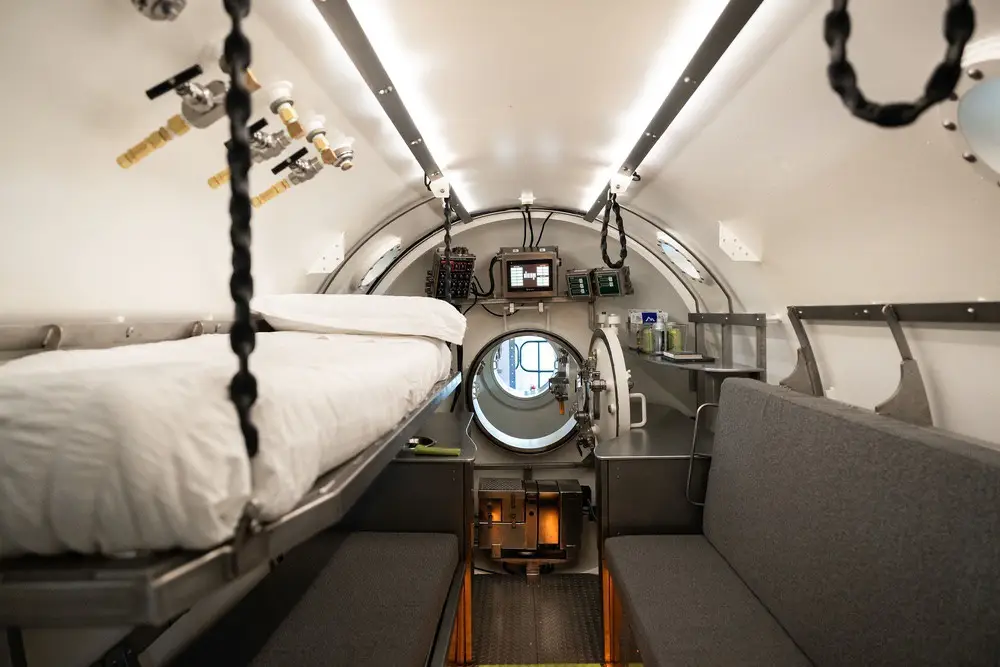
Now scale all of that up to the size of a subsea habitat — a structure designed for four people to live on for a week or more on the seabed. The main living chamber alone is a large diameter pressure vessel, and the complexity is enormous.
What Is WAAM and Why Does It Matter?
DEEP are going to be using a 3D printing method called WAAM — Wire Arc Additive Manufacturing.
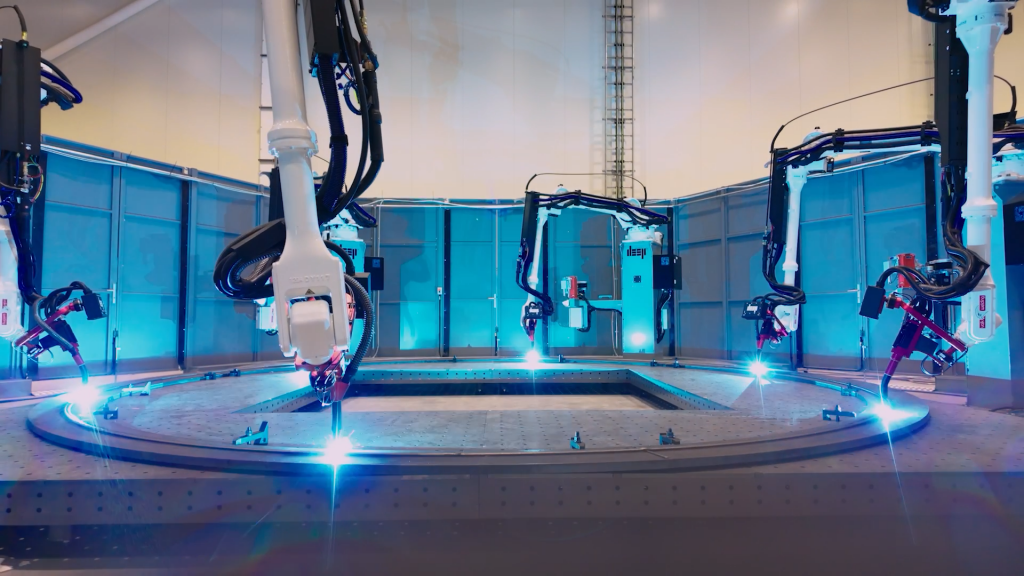
You probably know what a MIG welder is. Wire feeds through a torch, an electric arc melts it, and it fuses into whatever you’re welding onto. Now imagine that MIG torch is mounted onto a robot arm, and instead of joining two pieces of steel together, that robot arm is just building. It’s depositing bead after bead of metal, layer by layer, precisely where the computer tells it — building up a shape from nothing, from a bare platform, until you’ve got your finished component.
That’s WAAM. You’re adding material rather than removing it. The traditional approach — forging, machining, plate rolling — is subtractive. You start with more than you need and remove the excess, which means waste and cost.
With WAAM, you’re depositing material only where you need it. Near net shape, not far off your finished dimension straight off the robot. Far less waste, far less machining time.
DEEP Manufacturing say their WAAM process is up to three times faster than traditional forging and casting for large, complex components. Three times, on components that traditionally take months.
Meet Hexbot
Their flagship system is called Hexbot. It has six robot arms working together in synchronisation. Each arm can independently build components up to three metres in diameter — but when all six work together, they can produce components up to 6.2 metres in diameter and 3.2 metres in height as one continuous deposit.
To put that into context, that’s bigger than most of the chambers and vessels on any dive vessel a commercial diver will have worked around in their career. And it’s being printed.
DEEP have 20 individual robot arms in their Bristol facility — one of the largest concentrations of WAAM technology anywhere in the world. This isn’t a prototype or a proof of concept. This is an operational manufacturing facility producing safety-critical components right now.
The NDT Question: How Do You Inspect Something That’s Essentially One Continuous Weld?
Here’s something I don’t think any of the coverage of DEEP has picked up on — because the people writing about it are coming from the additive manufacturing world, not the diving inspection world.
When you build a pressure vessel in the traditional way, you end up with a weld map — a document showing every single joint on that vessel. Every longitudinal seam, every circumferential seam, every nozzle weld, every attachment. And every one of those joints has an inspection requirement attached to it.
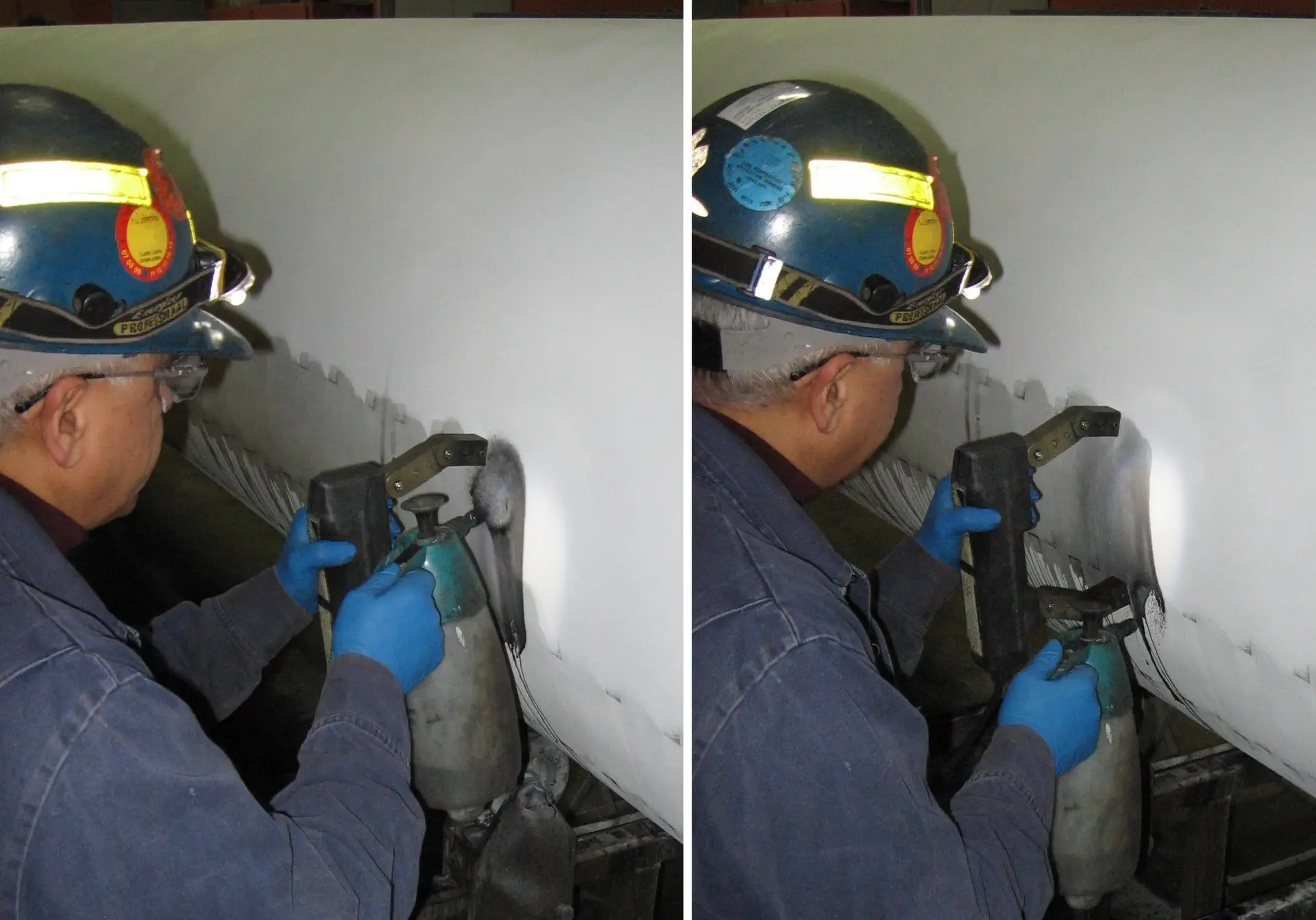
I’ve spent 20-odd years in that world — ACFM, MPI, ultrasonics. I know what a full inspection programme on a large pressure vessel looks like, and it’s substantial. It adds significant time and cost to every build. Rightly so, because those weld joints are where the failures happen. That’s where you find lack of fusion, porosity, and cracks.
With WAAM, the component is essentially one continuous deposit. You’re not joining discrete pieces together in the same way. The number of conventional weld joints needing the traditional inspection programme is dramatically reduced.
Does that mean less NDT? Not exactly — and this is important. The deposited material itself still needs volumetric inspection. Ultrasonics, for example. You still need to verify the integrity of what’s been built. But the inspection landscape is fundamentally different. Instead of a weld map with dozens of discrete joints each with their own acceptance criteria, you’re looking at the integrity of the deposit as a whole.
I’ll be honest — the industry is still working out exactly what that inspection regime looks like for WAAM components. The standards are still developing. But from where I sit, having spent my career finding defects in traditionally fabricated pressure vessels, the reduction in discrete weld joints is genuinely significant. Whether that ultimately means safer vessels or just differently inspected vessels, time will tell. But it’s not a step backwards.
What Does DNV Approval of Manufacture Actually Mean?
If you’ve spent time in the offshore world, you’ll know DNV — Det Norske Veritas — is one of the world’s leading classification societies. These are the people who approve diving systems, certify vessels, and set the standards the industry lives and dies by. Literally.
DEEP Manufacturing has received full Approval of Manufacture from DNV for their WAAM process.
And I want to be clear about what that means — because it is not a rubber stamp. It’s not someone turning up, having a look around, and signing a piece of paper.
DNV’s Approval of Manufacture programme is designed to verify that a manufacturer can consistently produce materials and components to a given specification in accordance with their rule requirements. Consistently — not once, not on a good day. Every single time.
DEEP have had to demonstrate their materials, their processes, their quality management, and their testing protocols to DNV’s satisfaction. The scope of that approval covers pressure vessels for human occupancy and whole structures and equipment — that’s not a narrow approval for a single component. That’s a broad endorsement of capability across safety-critical structures.
Only a handful of manufacturers globally have achieved this for WAAM. DEEP Manufacturing are the only ones in Europe.
On top of that, they’re running ISO 9001 quality management, JOSCAR (the Defence and Aerospace Supplier Qualifications scheme), and Cyber Essentials Plus accreditation.
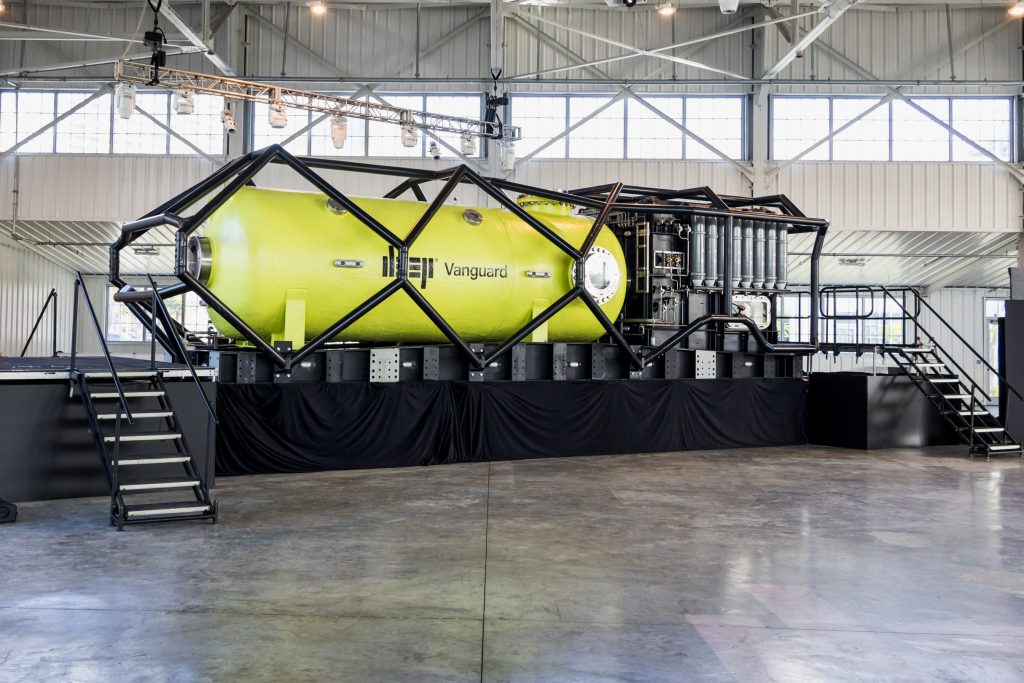
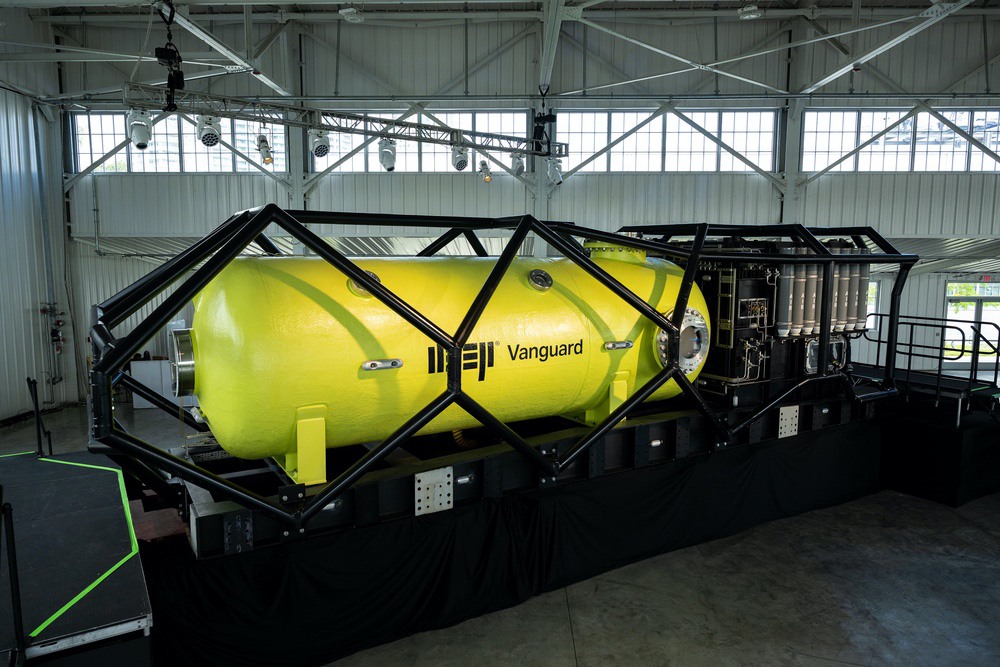
And then there’s Vanguard itself — their pilot habitat — which is going to be the first subsea human habitat ever to be classed under the full DNV rule set. Not approved in principle. Not a letter of no objection. Full class.
When someone asks whether it’s safe, my answer is this: the people responsible for deciding that independently, with no commercial interest in the outcome, have said yes. And in this industry, that’s the standard we hold everything else to.
The Vanguard Habitat: What Are They Actually Building?
Vanguard is DEEP’s pilot subsea human habitat, designed for four crew and medium-duration missions — seven days or more on the seabed in the open ocean.
There are three main parts to it:
The Living Chamber — where the crew eat, sleep, work, and carry out their daily tasks. Built to withstand the pressure of the water column above it and keep the occupants safe and dry inside. This is the part DEEP Manufacturing are printing right now.
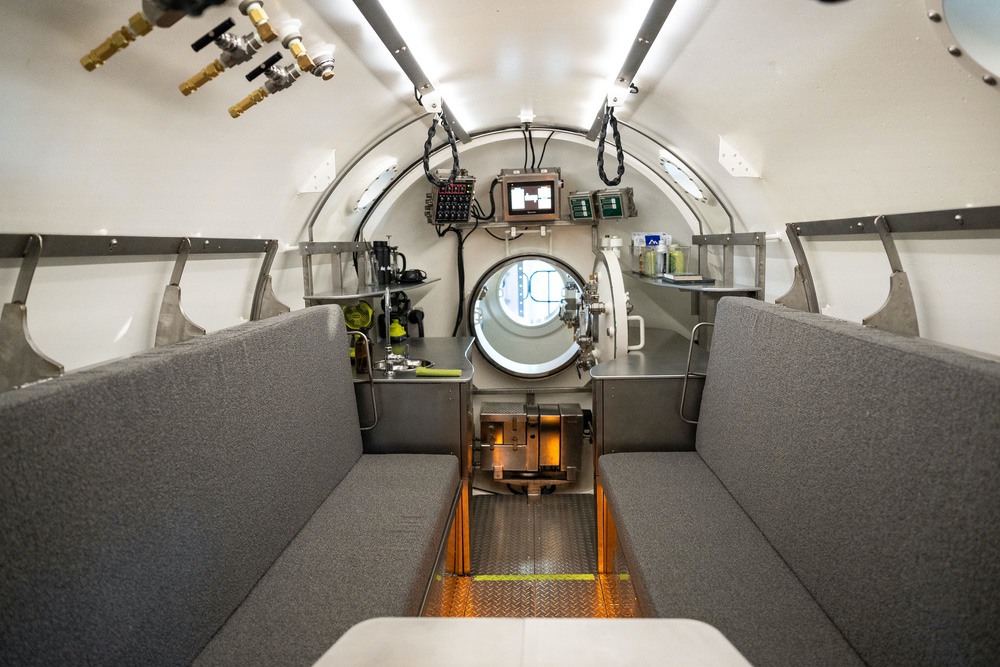
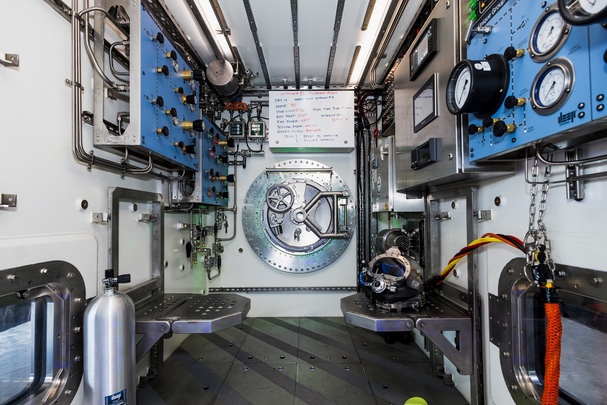
The Dive Centre — attached to one end of the living chamber, this has a moon pool — an opening in the floor to the ocean. You kit up in the dive centre, drop through the moon pool, and you’re in the water. Same principle as a diving bell, or the wet pot on a saturation system, just built into a permanent structure on the seabed.
The Foundation — the structure that holds the whole thing down on the seabed and keeps it stable against waves and storm surge. Originally DEEP planned to deploy Vanguard in their lake at the Chepstow campus, but as customer conversations developed, they realised there was a demand for open ocean deployment — so they redesigned the foundation completely to handle real ocean conditions.
Up at the surface, a buoy tethered to the habitat below provides compressed air, power, and communications to the crew on the seabed.
The Contractors Involved
Triton Submarines (Florida) — handling pressure vessel design and certification.
Unique Group — many of you will know them well from the diving and marine services world. They’re involved in underwater systems integration.
And the first component DEEP Manufacturing are printing right now is the multi-purpose module — an emergency transfer structure that will attach to or near Vanguard, allowing the crew to transfer to it in an emergency.
Once complete, it will be the first ever additively manufactured pressure vessel for human occupancy in history.
My Honest Take
So would I get inside one?
First, the technology is real. I went into this with a healthy degree of scepticism and came out genuinely impressed. A former NASA engineer, a Bristol facility with 20 robot arms, full DNV approval of manufacture, Triton Submarines and Unique Group as contractors. That isn’t a crowdfunded dream — that’s a serious engineering programme with serious people and serious money behind it.
Second, the safety framework is there. DNV class on the habitat itself, DNV approval on the manufacturing process, ISO 9001 quality management. If you hold WAAM-built components to the same standard of evidence you’d apply to anything else in this industry, the evidence stacks up.
But I want to be honest about where the questions remain. WAAM is still relatively young technology in the context of safety-critical pressure vessel fabrication. The inspection standards are still developing. The long-term material behaviour under cyclic pressure loading — the kind of loading a habitat experiences over years of operation — is still being understood. DNV approval is a massive step, but it’s the beginning of the story, not the end.
I would get in one — if it’s DNV classed, if the inspection programme is robust, and if the operational safety case has been properly worked through. Because at the end of the day, that’s the same standard I’d apply to any piece of kit I’ve ever put my life inside. Not how it was made. Whether it was made properly.
On the evidence available right now, DEEP are making it properly.
What Does This Mean for Divers?
There are two ways to look at it.
The optimistic view: if WAAM dramatically reduces the cost of building large, complex pressure vessels — and the numbers suggest it does — then structures that weren’t financially viable before suddenly become viable. More habitats, more subsea infrastructure, and all of that needs support. Divers, inspection, operations. Aquarius off Florida has had divers supporting it for decades. Scale that model up globally and you’ve got potentially an entirely new category of diving work that doesn’t exist yet.
The more cautious view: cheaper and faster manufacturing means less skilled fabrication work on the traditional side. The welders, the platers, the NDT technicians working on pressure vessel fabrication yards — their world changes if WAAM becomes the norm. That’s not a reason to oppose the technology, but it’s worth being honest about.
Where Does DEEP Go From Here?
Vanguard is the pilot — the proof of concept. The next habitat in their roadmap is called Sentinel. Beyond that, the vision is a global network, multiple habitats, multiple locations, permanent human presence under the ocean at a scale that’s never existed before.
That’s an ambitious vision, and ambitious visions don’t always survive contact with reality. But the foundation they’re building — the manufacturing capability, the classification framework, the contractor relationships — that’s not the foundation of a company that’s just talking. That’s the foundation of a company that’s building.
If you want to follow their progress, you can find them at deep.com and on social media at @deepengineered across Instagram, TikTok, YouTube, and LinkedIn. This is one to watch.
So — Would You Get in One?
I asked you that at the start, and I’ll leave it with you now, because I think your answer says something interesting about where you are in your relationship with this industry.
If your gut reaction is still no — I get it. Years in this world gives you a healthy respect for pressure vessels and everything that goes into making them safe. That instinct has kept a lot of people alive.
But if you’ve taken in everything we’ve covered, and your answer is shifting even slightly — I think that’s the right response. Because this industry has always evolved. The equipment we trust our lives to today would have seemed extraordinary to the divers who came before us.
WAAM-built, DNV-classed subsea habitats might just be the next chapter of that story.
Want to go deeper on topics like this — the technology, the industry, the things diving schools never taught you? Come and join the Beyond the Surface community at beyondthesurfaceoffshore.com. And if you enjoyed this episode, leave a review wherever you get your podcasts — it makes a real difference to how many people find the show.