By Stu Sutcliffe | Beyond the Surface Podcast Episode 5
Think your accent, background or age will hold you back offshore? Here’s what 23 years in the industry actually taught me about how crews work.
The Moment I Realised I Stood Out
After my diving accident I ended up working with the riggers on a dive support vessel — the guys on the back deck handling all the lifting and slinging. If you don’t know riggers, picture a collection of Geordies, Yorkshiremen and Scousers, hard working, covered in tattoos, and when they’re not on deck they’re either in the gym or in the galley.
Then there was me. Shiny boots, clean overalls, and a southern accent.
The deck foreman took one look at me, heard me speak, and said: “Are you sure you’re the rigger?”
Getting Stuck In — The Only Currency That Matters
My philosophy has always been simple. Get stuck in and do the best you can. Every shitty job that came up, I was first in line. No moaning, no complaints. Within a couple of weeks I felt like part of the crew.
At the end of that job we did a run ashore in Mobile, Alabama. After several drinks, the big Yorkshireman grabbed me and said: “Stuart, at the start of this job I thought you were a right posh twat. But because you got stuck in and did the work, you’re like a son to me.”
That was the first time I truly understood how offshore crews work.
The Lesson I Had to Learn Twice
Knowing how to work hard wasn’t the only lesson. On another job I completely misread the room.
The lads were bantering, as you do offshore. Someone made a joke about me being management. I was having a bad morning and launched into a long explanation about how I wasn’t like that and how they were taking the piss because of my accent.
The room went quiet. Someone just said: “It’s only a joke, mate.”
In that moment I realised I wasn’t being judged for my accent anymore. I was being judged for not knowing when to laugh at myself.
Prince Harry and the Hard Hat
Years later, running my own company in Newcastle doing inspections on cargo reels dockside, I found out my nickname among the Geordie workforce was Prince Harry.
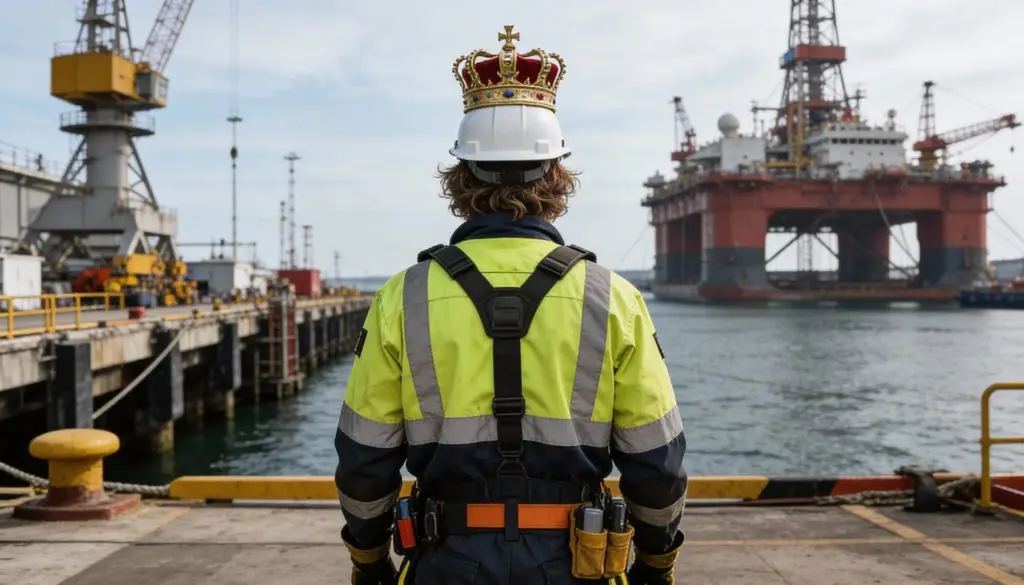
So I wrote HRH Wales on my hard hat.
The next time I went on site I was met with embarrassed grins all round. Lean into it. It works every time.
What This Actually Means for You
These stories aren’t really about accents. They’re about culture. Every offshore crew has its own way of being, and respect is earned by what you do, not how you talk.
The offshore industry in the UK is a melting pot — Geordies, Scots, Yorkshiremen, Welsh, and yes, the occasional posho. Beyond that you’ll work with Russians, Ukrainians, Filipinos, Americans, South Africans, West Africans, Australians. Probably most nationalities at some point.
Everyone has quirks. Often the very things that make you stand out at first are what help you find your place in the end.
If You’re About to Go Offshore for the First Time
Here’s what I wish someone had told me:
You don’t have to change who you are. You don’t need a fake accent. You don’t need to match the banter perfectly. All you need to do is show up, graft, and treat people properly.
Offshore crews don’t care where you’re from. They care whether you’ll pull your weight when it’s cold, wet and miserable. Do that and everyone will have your back — even if you’re a Scouser.
If you feel like you don’t belong because of your accent, your age or your background — remember this: every single person on that vessel felt like an outsider once. You won’t earn your place with words. You’ll earn it with effort.
One day you’ll look down at your hard hat, see a nickname you didn’t choose, and realise you’re part of the crew.
Listen to the full episode on Spotify or Apple Podcasts
Want real guidance on getting into the offshore industry? Join the Beyond the Surface community