CSWIP, NDT and What the Job Actually Involves
By Stu Sutcliffe | Beyond the Surface Podcast Episode 6
Most people picture offshore inspection as a diver with a torch having a look around. The reality is a coordinated system of people, physics, equipment and judgment. Here’s how it actually works — and how you get into it.
Why Offshore Inspection Exists — The Alexander L. Kielland
Picture the North Sea. It’s 1980.
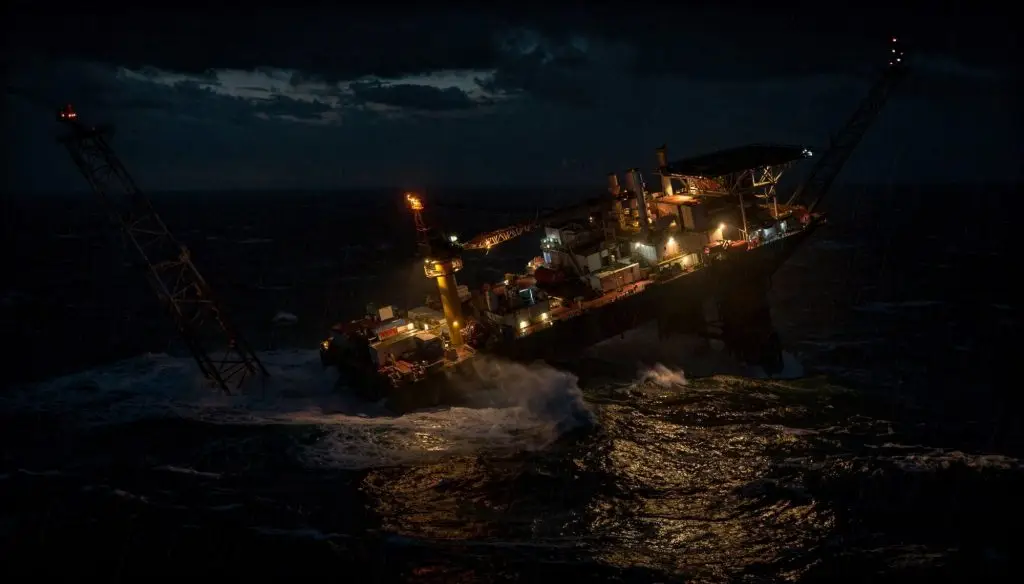
The Alexander L. Kielland was a Norwegian semi-submersible drilling rig operating in the Ekofisk oil field, approximately 320 kilometres east of Dundee, Scotland. It was also being used as an accommodation platform — a floating hotel providing living quarters for offshore workers. More than 200 men were off duty on board.
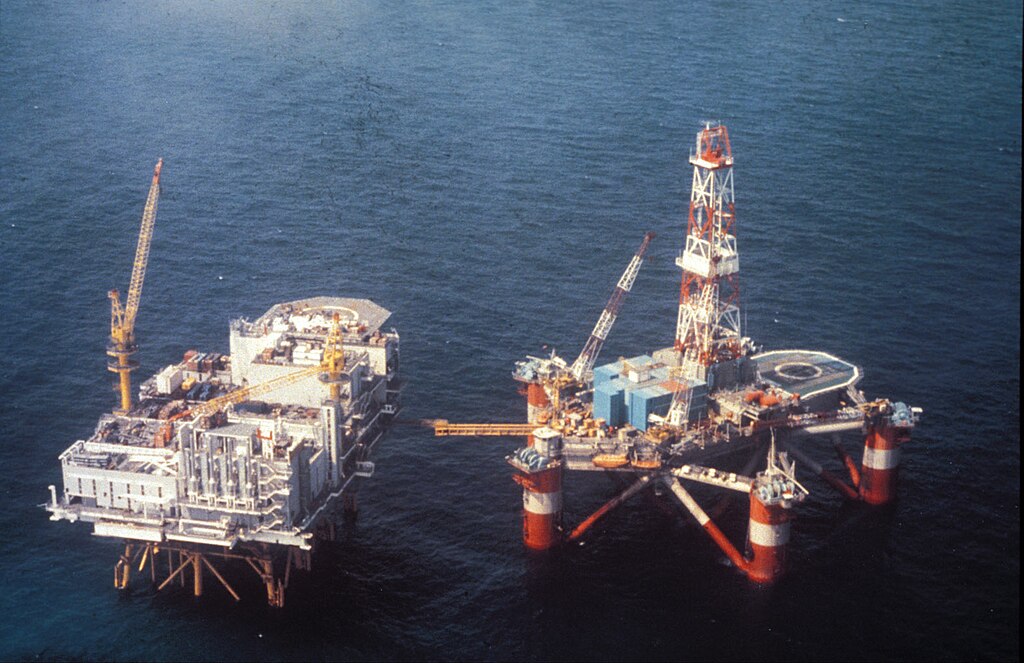
Oljemuseum, CC BY 3.0 https://creativecommons.org/licenses/by/3.0, via Wikimedia Commons
It was rainy, with dense fog. The wind was gusting up to 40 knots — about 74 kilometres an hour. Waves were up to 12 metres high.
Minutes before 18:30, the men on board felt a sharp crack, followed by trembling. The platform heeled over 30 degrees and stabilised. Five of the six anchor cables had broken. At seven minutes to seven, the remaining cable snapped. The rig capsized.
123 men lost their lives. The worst offshore disaster in Norwegian history since the Second World War.
In March 1981, investigators concluded the Kielland collapsed due to a fatigue crack in one of its six bracings — bracing D6. The crack was traced to a small 6mm weld joining a non-load-bearing flange plate. Poor weld profile, lamellar tearing, cold cracks, and the cyclic stresses of the North Sea all played their part.
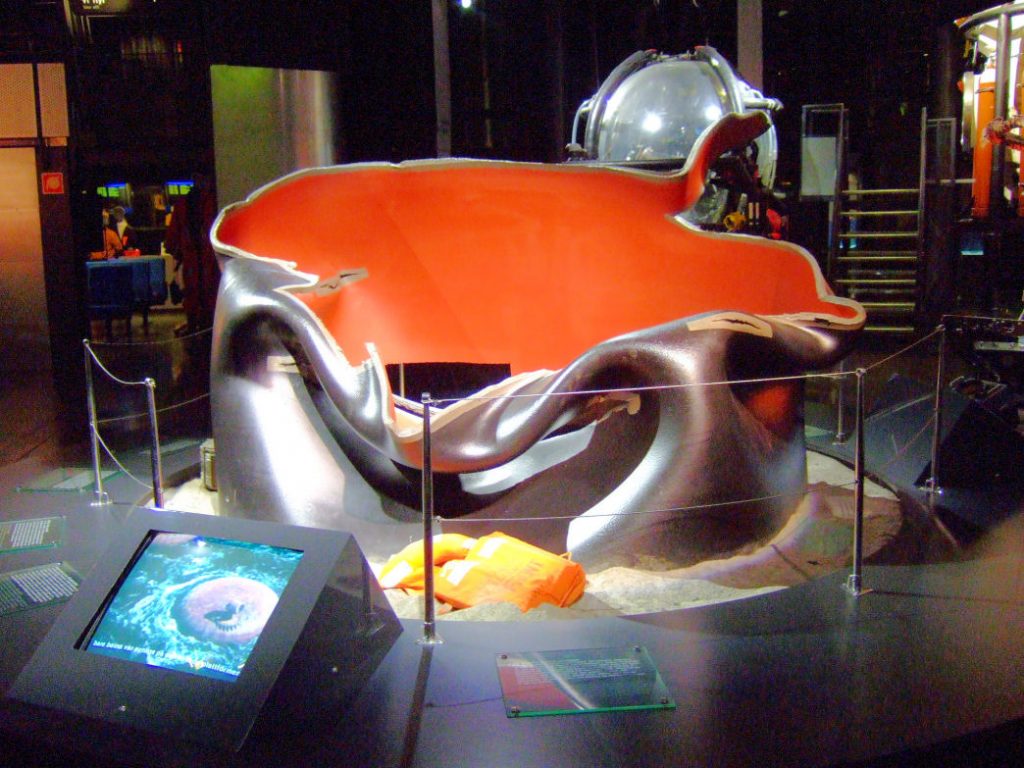
The crack was probably there from construction in 1976. Because of it, major structural elements failed in sequence and the entire structure destabilised.
Steel doesn’t fail suddenly. It whispers. And inspection is listening.
What Offshore Inspection Actually Is
Most people imagine offshore inspection as a diver with a torch having a look. It isn’t.
An offshore platform lives in one of the most aggressive environments you can put steel in. Salt water is an electrolyte — it conducts electricity. Steel in salt water sets up tiny electrochemical cells across its surface. Metal dissolves from one area and migrates to another. That’s corrosion.
Then there’s fatigue. Take a paperclip and bend it once — fine. Bend it back. Continue bending it and after approximately the twentieth time, it snaps. Offshore structures experience millions of load cycles. Every wave is a stress event. Every storm compounds it. Fatigue cracks start microscopic, invisible to the naked eye, at the grain boundary level.
That’s why inspection isn’t about “is it broken?” It’s about “is it beginning to break?”
Imagine you’re 100 metres down, you can’t see more than half a metre, and the steel feels solid in your hand. It looks fine. But you know from experience that cracks initiate at weld toes, at nodes, and where structural members meet — because those are the areas of concentrated stress. You know where to look because you’ve learned what normal looks like.
People don’t see the constant inspection. They see the headlines when things fail. Inspection is the invisible layer that prevents the headlines.
The £125,000 Mistake — Why Physics Matters More Than Certificates
I was part of a job a few years ago on a DSV — a dive support vessel on dynamic positioning. We were working 24 hours around the clock in 12-hour shifts. The client was on board, we had tight weather windows, and the vessel was costing £250,000 a day. Every hour counted.
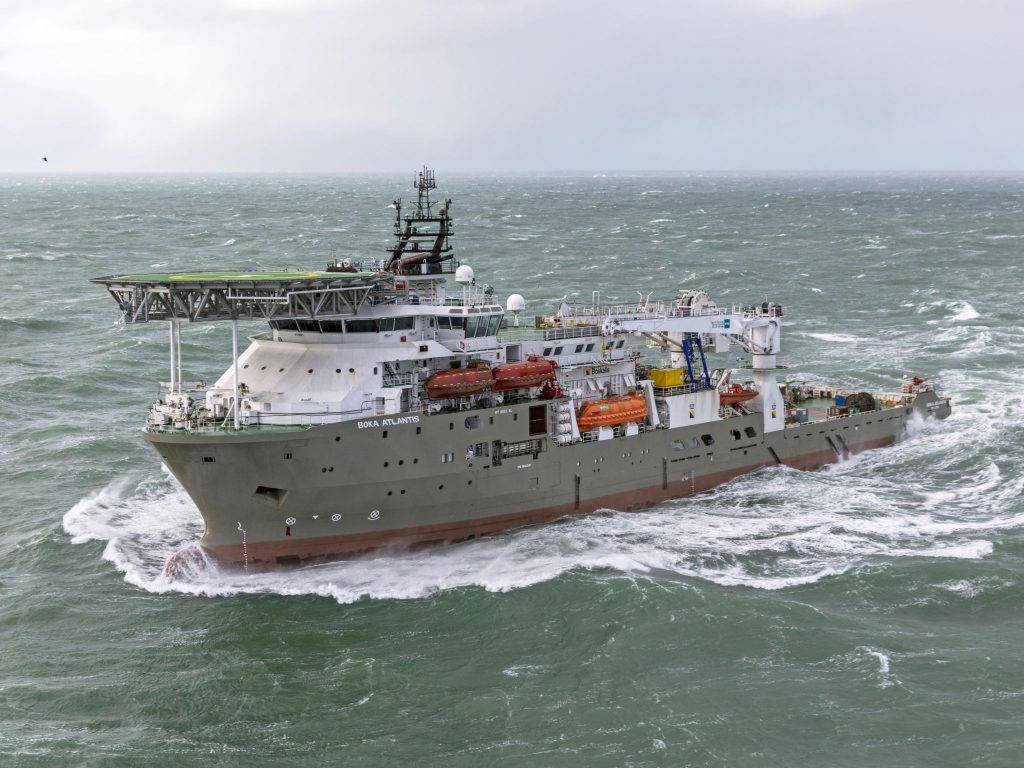
We had a newly qualified inspector on board, ticket in hand, confident. That confidence caused a problem.
We were performing ultrasonics — UT — which works by sending a sound signal into steel. The sound travels in, hits something, reflects back towards the probe. The frequency and geometry matter. If you’re measuring a curved pipe with a probe designed for a flat plate, the beam path changes. Your calculation will lie to you.
The probe we had wasn’t right for the diameter of pipe we were testing. It needed a small shoe so it would sit on the pipe without rocking. I wasn’t comfortable with the setup and said so — I will not do this inspection with this piece of equipment.
I went off shift. The newly qualified inspector came on and decided he was going to prove himself. He spent his entire 12-hour shift using the wrong equipment, directing divers to take measurements, writing down hundreds of thickness checks on that pipe.
At the morning meeting he was pleased as punch — he’d got all the data I’d refused to take.
I asked him what the nominal wall thickness was. He told me. I said: “You’ve found the only pipe in the North Sea that’s gained metal overnight.”
Pipes can’t get thicker. The data was physically impossible.
A 12-hour shift on a £250,000-a-day vessel. And if that data had gone into an integrity model unchallenged, decisions might have been made on numbers that couldn’t exist.
Qualification proves knowledge of theory. Competence is knowing when a reading violates reality.
The Tools — How We Actually Find Defects
Visual Inspection
Everything starts here. Before any NDT begins, a close visual inspection notes anything that might affect probes or could be considered a defect. It’s the foundation everything else builds on. The steel often tells you where to look — if you know how to read it.
Magnetic Particle Inspection (MPI)
Cracks don’t glow unless you make them glow. Defects don’t introduce themselves — but they do disturb invisible forces.
Steel can carry magnetic fields. If the steel is sound, the field flows smoothly through it. If there’s a crack, the field gets distorted and leaks out slightly. With MPI we magnetise a small area of steel then apply fine iron particles in a fluorescent solution. If there’s a crack, the particles gather at the point where the field has leaked.
The diver positions an ultraviolet light over the area and wafts in the liquid carrying the particles. He watches for a glowing line where the iron particles coalesce. Sometimes it’s a faint trace. Sometimes it stands out bold as brass under the UV light.
MPI depends on the surface condition of the component, the correct magnetisation direction, and proper preparation. If your magnetic field runs parallel to a crack, you might not see it. Rotate 90 degrees and interrogate from another angle — now the flux leakage will draw the particles in.
Before any MPI inspection, we verify the magnetism is strong enough using an indicator strip. Three lines on that strip confirm the field is correct and the inspection can proceed. I remember a diver who insisted he didn’t need any guidance and told me he had all three indications on his strip at all four cardinal points. I asked him if he’d like me to turn on the magnetisation. Silence.
Confidence won’t energise a magnet. But a procedure will.
ACFM — Alternating Current Field Measurement
MPI is thorough but slow — you have to clean the entire area first, which can mean grit blasting hundreds of metres of structure. If you don’t want to remove protective coatings, or if you need to cover large areas quickly, ACFM is the answer.
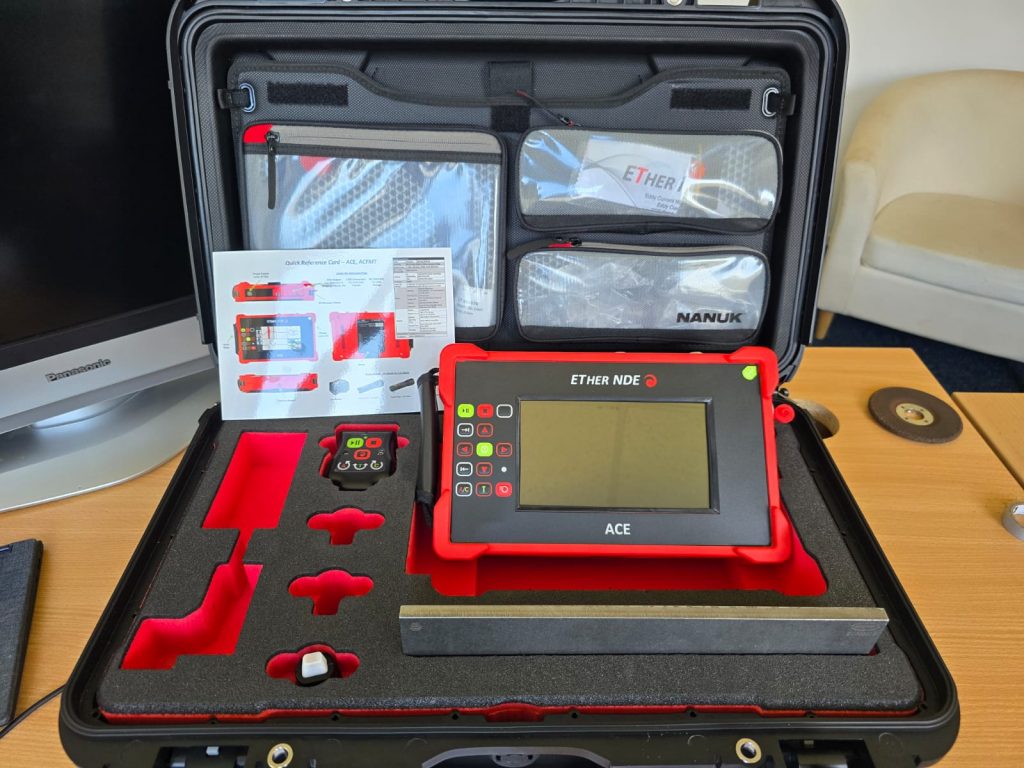
ACFM introduces a small electric current into the steel and measures how the electromagnetic field behaves. If there’s a crack, the field changes and the probe detects it. MPI lets you see the magnetic disturbance. ACFM lets you measure it.
If ACFM flags a potential defect, we’ll then go in with MPI over that specific small area to confirm — because ACFM can also pick up differences in the grain structure of the metal which can look like a defect but aren’t.
Inspection offshore isn’t about one magic tool. It’s about choosing the right method for the situation.
Ultrasonics (UT)
UT sends a sound signal into the steel, which reflects back from whatever it hits. The probe angle, frequency and geometry all matter. The wrong probe for the geometry of the pipe you’re testing will give you numbers that are physically impossible — as our newly qualified inspector discovered.
What a Real Inspection Dive Actually Looks Like
So the tools are ready. Now how does it actually run?
Topside preparation — the topside inspector is responsible for equipment selection, calibration checks, correct probes, consumables for the divers — magnetic markers, crayons that write on steel underwater, vernier gauges, rulers, measuring tapes. If the equipment isn’t right topside, it doesn’t matter how skilled the diver is underwater.
The supervisor controls the dive — gas monitoring, depth, comms, deck coordination. Once the diver leaves the deck, the supervisor owns that dive. There’s a full pre-dive checklist: comms check, bailout check, umbilical check, hot water suit check if applicable.
The descent — sounds change, light fades, temperature drops, visibility reduces. Surface noise disappears. You can hear yourself breathing and the comms crackling. The deck crew prepare inspection gear to send subsea via a down line.
On the structure — the diver orientates himself, confirms location, cleans the marine growth from the inspection area. Marine growth hides everything. It can take hours. Cleaning alone isn’t glamorous but it’s essential.
Control handover — once the site is set up, the supervisor hands the headphones to the topside inspector. The supervisor still manages diver safety. The inspector now directs the task.
Marking up — before NDT begins, the diver marks the inspection zone with crayon marks every 100mm around the weld circumference, starting at the 12 o’clock datum. That traceability matters — if a defect is found and monitored over years, you need to be able to return to the exact same physical location.
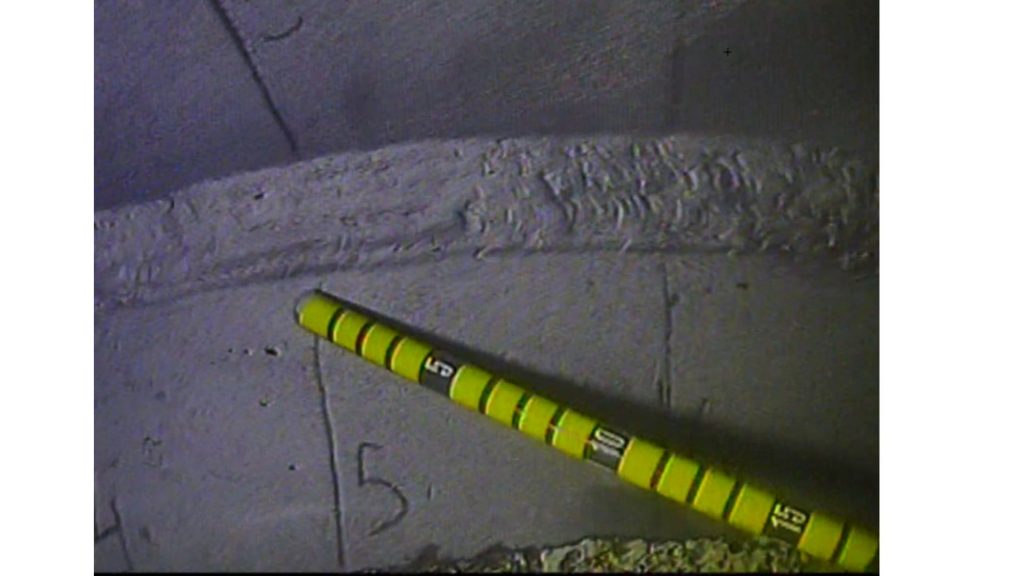
The ACFM scan — the inspector tells the diver to place the probe at the datum at zero and move clockwise along the weld, calling out weld markings. “Passing datum, passing 100mm, passing 200mm, passing 300mm, stop.” The signal comes up to the surface readout. The inspector interprets it. If there’s a suspicious pattern, the diver goes back to that location.
Confirmation — if ACFM flags something, MPI goes in to confirm. If a defect is confirmed, the asset integrity engineers onshore do the calculations — repair it, monitor it, or increase the inspection scope.
From the surface it might look like a diver goes underwater, blows some bubbles, and comes back up. In reality it’s people, physics, equipment and judgment all working together to answer one question: is the steel still sound?
The Qualifications — 3.1U, 3.2U and 3.4U
Before explaining what these mean, it’s worth knowing they are not job titles. They are competency levels. And they don’t tell you how good somebody is — they tell you what they’re qualified to do.
3.1U — trained in visual inspection and underwater inspection terminology. Capable of close visual inspections, general visual inspections, and pushing probes for an experienced ACFM inspector. Not qualified to perform MPI or other NDT methods independently.
3.2U — the advanced NDT course. The natural progression from 3.1U, covering more methods and more responsibility.
3.4U — underwater inspection controller. A topside, non-diving role. You’re directing the divers, interpreting the data, making the calls. This is where the inspection decisions are made.
The difference between 3.1U and 3.4U isn’t status — it’s scope. Some 3.1U divers are phenomenal inspectors. Some higher-ticket divers still need mentoring. Competence comes from experience, not certification level.
At the end of the day offshore, nobody cares what your certificate says once you’re underwater. What matters is whether you notice what others miss.
How to Get Into Offshore Inspection Diving
Nobody starts offshore as an inspector. You earn your way there.
You’re not going to leave dive school and immediately start inspecting structures. You’ll start inshore — civil engineering, construction diving, aquaculture. You’ll learn the tools, learn the procedures, watch experienced divers and inspectors, and learn what normal looks like before you can ever recognise the abnormal.
The certificates get you considered. The experience gets you trusted.
To be a good inspector you need pattern recognition, patience, attention to detail, and the willingness to ask questions — especially about readings. And the comfort of saying “that doesn’t look right” even when it’s inconvenient.
The procedures offshore aren’t bureaucracy. They’re memory aids written in advance — before pressure, before fatigue, before assumptions can creep in.
Listen to the full episode on Spotify or Apple Podcasts
Interested in a career in offshore inspection diving or NDT? Join the Beyond the Surface community