What Nobody Tells You After Diving School Qualification
Nobody warns you about the silence.
You leave diving school with your ticket, your logbook, and probably a fairly significant dent in your bank account. You pass the exams, you’ve done the practical assessments, and you’re certified. In your head, the next step feels obvious. You’re a commercial diver now, so the work should follow.
Then you get home and the phone doesn’t ring. Emails go unanswered. CVs disappear into inboxes that never reply. Days turn into weeks, sometimes weeks turn into months. And nobody not your diving school, not the industry, not anyone really prepares you for that part.
That gap between certification and reality is what this is about. The things diving schools teach you are genuinely important, but there’s a whole other education that happens afterwards, and it happens the hard way.
My Route In: The Middle East Before the North Sea
Before I get into this, I want to give you a bit of context on where I’m coming from.
I came into commercial diving via dive instruction, and my entry into the industry was through the Middle East rather than the UK. Work came relatively quickly out there as an expat the offshore scene was more accessible, companies were willing to take chances on people, and I built up some early experience and confidence.
So when I came back to the UK, I wasn’t a brand new diver with no experience. I’d already been working offshore, and I thought the North Sea would follow the same pattern.
It didn’t. And that’s where this story starts.
The Unwritten Rules of the North Sea
The Middle East offshore scene as an expat is a different world to the North Sea. Companies out there are used to hiring international workers people arriving without local networks, without local references, without a reputation that precedes them. They take more chances and give people opportunities to prove themselves.
The North Sea is not like that.
The North Sea diving industry is one of the most network-driven hiring environments I’ve ever encountered. Companies hire people they know, or people recommended by people they know, or people who’ve worked for them before and didn’t cause problems. Trust is the currency, and trust takes time to build.
As a returning expat without an established North Sea network, you’re essentially starting again. It doesn’t matter what you’ve done elsewhere. It doesn’t matter how much experience you’ve accumulated in other regions. You’re an unknown quantity to the people who matter, and unknown quantities often don’t get the call.
That’s not a criticism of the industry it makes sense when you understand it. These are high-risk operations and the people running them want known quantities around them. But here’s the problem: nobody tells you any of this before you come back. You arrive with offshore experience and a reasonable expectation that the work will follow. And then the silence starts.
The Isolation and Rejection of Early Career Waiting
So there I am, back in Scotland, CVs sent out, emails fired off, waiting.
The thing about waiting in a small industry is that it doesn’t feel like a systems problem. It doesn’t feel like the market is slow or the timing isn’t right. It feels personal. It feels like rejection. Every unanswered email feels like someone looked at your CV, looked at you, and decided you weren’t worth a reply.
Most of the time, that’s not what’s happening at all. The reality is far more mundane your CV has landed in an inbox that gets hundreds of applications a week, and yours went to the bottom of the pile. It’s not personal. But when you’re living it, it’s very hard not to feel that way.
Then there’s the isolation. You’re not on a vessel, you’re not in a team, you’re just waiting alone. Watching other people seem to get opportunities while you’re sitting wondering what you’re doing wrong.
I kept running into a particular frustration: every time I went back to the Middle East to pick up work because I still had contacts there and work was available a North Sea opportunity would appear while I wasn’t there to take it. And in this industry, availability is everything. If you can’t say yes today, they move on to the next name on the list.
So I made a decision. I was going to stay in Scotland. I was going to be available. Whatever work came however small, however unglamorous I was going to take it. Because presence, I was learning, matters more than almost anything in the early stages of a diving career.
This is the phase where a lot of people quietly leave the industry. Not because they can’t dive, not because they made the wrong choice, but because they couldn’t survive the waiting. And I completely understand why.
The Unglamorous Reality of Cold, Leaky Dry Suit Diving
The work that kept me afloat during that period was call-out diving with a company called Grampian Divers in Aberdeen Harbour.
Let me paint you a picture of what that actually looked like, because I think it’s important to be honest about this.
Aberdeen in winter is not a pleasant place to be standing on a harbour wall waiting to get in the water. It’s cold, it’s grey, the wind is coming in off the North Sea and it means business. I was doing these jobs in a dry suit that was and I’m being generous here slightly too small and not entirely waterproof. I was skint and couldn’t afford better kit. So I pulled on this dry suit that didn’t quite fit, squeezed myself into it, and got in the water because the job needed doing and, more importantly, I needed the money.
One job that sticks in my memory was clearing ropes out of a thruster in the harbour. If you’ve never done that kind of work, it’s about as glamorous as it sounds cold, limited visibility, arms wedged into awkward spaces, rope wrapped around everything. Sometimes the sea steel would have essentially welded itself from the heat and you’d have to hack away with a chisel. Not dangerous in a dramatic sense. Just uncomfortable, cold, and thoroughly unglamorous.
Not quite like teaching people to dive in the Middle East.
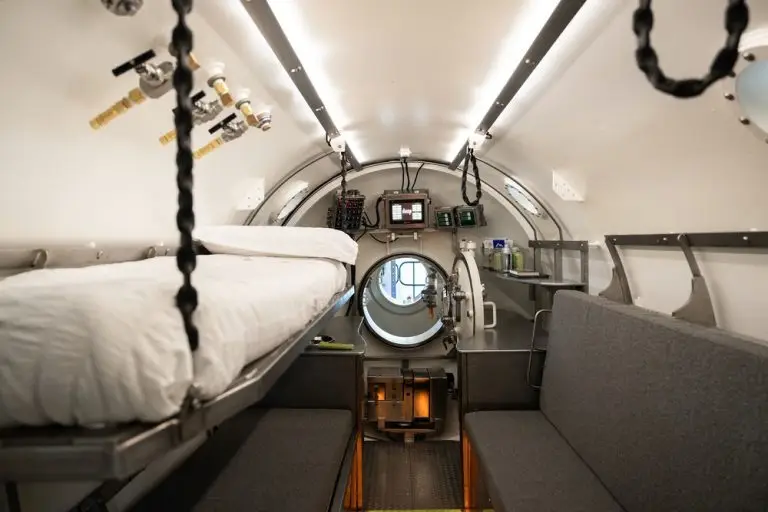
This is the part of the diving career that doesn’t make it into the brochure. Diving schools will show you the exciting stuff the offshore structures, the SAT systems, the big vessels. Nobody shows you the Aberdeen harbour thruster job in a leaky dry suit in December.
But I took every single one of those call-outs. Every one. Because that was what was available, and staying visible and available was the only strategy I had. And honestly, I was grateful for them without Grampian Divers and those harbour jobs, I don’t know how that period of my life would have looked financially.
Finding Proof That the Road Goes Somewhere
There’s a moment I think about quite a lot when I reflect on that period.
It was on one of those harbour call-outs. Another diver turned up to work the job with me clearly experienced, good kit, good demeanour, knew exactly what he was doing. A SAT diver. We got chatting, the way you do, and at some point he asked what other work I was doing. Who else was I working for? What companies, what else was on the go?
Embarrassingly and it felt embarrassing at the time I told him the truth. I said: this is it. These harbour call-outs with Grampian Divers. That’s what I’m living on.
He didn’t say anything unkind, wasn’t patronising about it. But I could see him doing the mental arithmetic. For him a SAT diver with a North Sea contract these harbour call-outs were pocket money. Something to do between real jobs, a bit of extra cash. For me, they were survival.
At the end of the job, he offered me a lift. We walked over to his car. It was a Porsche.
I don’t remember the exact model. I just remember standing there on the harbour in my slightly damp dry suit, looking at that car, and thinking: right. That’s where this road goes. That’s what’s on the other end of this.
He wasn’t showing off. He wasn’t making a point. He was just a guy who’d been in the industry long enough and worked hard enough that a Porsche was a reasonable thing to own. But that image stayed with me not out of envy, or at least not entirely out of envy, but as proof. Proof that the road existed. Proof that the harbour jobs and the leaky dry suit were part of a journey that actually went somewhere.
Sometimes that’s all you need. Just evidence that the destination is real.
How Inland Diving Became a Valuable and Enjoyable Detour
Alongside the Grampian Divers call-outs, I picked up work with a company called Caldive, based in Invergordon, run by a guy called Ian Beaton. Most of their work was on the West Coast of Scotland all inland diving, not offshore, not the contracts I’d been chasing.
I took it deliberately. Not because it was what I wanted, but because I understood something important by that point: if I went back to the Middle East where work was easier to get and the money was better, I wouldn’t be in Scotland when the North Sea opportunity finally appeared. And it would appear I believed that but only if I was there to answer the phone.
The strategy, if you can call it that, was simple: stay, be available, take whatever comes, don’t disappear.
In practical terms, that meant swallowing some pride. There’s a version of yourself at that stage of a career that has a very clear idea of what kind of diver you are and what kind of work you should be doing. The harbour jobs and the inland work don’t match that image.
But here’s the thing and I want to be honest about this that West Coast work with Caldive turned out to be some of the most enjoyable diving I’ve done in my entire career. Small teams, beautiful locations, interesting work. The kind of diving where you actually get to be a diver rather than a small cog in a massive offshore operation.
Did I make much money? Honestly, not really whatever we earned seemed to find its way to the pub at the end of the day, which felt completely reasonable at the time and I have absolutely no regrets about. But the work itself? I look back on that period with genuine pride. The guys I worked with were excellent divers and good people, and I learned a huge amount skills, judgement, how to work as part of a small tight-knit team.
Sometimes the detour is the best part of the journey. That period on the West Coast that I initially saw as a compromise turned out to be anything but.
Practical Advice for New Divers in the Waiting Phase
Let me get practical for a minute, because I don’t want this to just be a story. I want it to be useful.
If you’ve just come out of diving school and you’re in that waiting phase right now, here’s what you need to hear.
Do not stop looking. The moment you stop sending CVs, stop making calls, stop putting yourself out there it won’t come. The opportunity isn’t going to find you sitting on your sofa. This industry rewards persistence above almost everything else.
Be clear-eyed about the financial reality. You’ve potentially just spent £12,000 or more getting your commercial diving ticket. That money’s gone it was an investment, but an expensive one. If you sit back and wait for the industry to come to you, you’ll find yourself in a financial hole that gets harder and harder to climb out of.
While you’re waiting, get more skills. Look at an inspection course. Look at a rigging course. Look at anything that makes you more valuable, more versatile. Yes, the courses are expensive. But you’ve already demonstrated you’re willing to invest in yourself you spent £12k on your diving ticket. Spending another few thousand on an inspection qualification is the same decision.
And here’s the brutal truth that nobody really says out loud: you’ve chosen a really difficult career. The brochure version of commercial diving the SAT systems, the exotic locations that exists, but it’s at the end of a long road. The road to get there is cold harbour jobs, possibly in Aberdeen, possibly in a leaky dry suit. You need to actually want to be a diver. Not the idea of being a diver. Not the Instagram version. The actual reality: uncomfortable, unglamorous, waiting-by-the-phone reality of building a career in this industry from scratch.
The Pipe: A Shawshank Analogy for Your Diving Career
There’s a scene in The Shawshank Redemption that I think is the best analogy I’ve ever found for a commercial diving career. Bear with me.
Andy Dufresne is wrongly imprisoned. He spends years planning his escape, and when the moment comes, the way out isn’t clean or easy or dignified. He has to crawl through a pipe full of sewage 500 yards of it to get to his freedom. And he does it, because he knows what’s on the other side.
A commercial diving career is the same.
The early years the silence, the harbour jobs, the leaky dry suits, the waiting that’s the pipe. It’s not pleasant. It’s not what you imagined. But the people who come out the other side are the ones who kept crawling.
So what don’t diving schools teach you? They don’t teach you the silence. They don’t teach you the waiting. They can’t teach you how to survive on harbour call-outs while a SAT diver drives past you in a Porsche. You have to live it.
But if you’re in that phase right now, I want you to know: it’s normal. It’s not a sign you made the wrong decision. It’s not a sign you’re not good enough.
It’s the initiation. It’s the pipe.
Keep crawling. Get extra skills. Stay visible, stay humble, stay available, and don’t stop looking because the moment you stop looking, it stops coming.
The road is hard at the start, but it goes somewhere.
I’m Stu, and this is Beyond the Surface. If this resonated with you, share it with someone who needs to hear it because this is exactly the kind of conversation nobody was having when I was starting out, and somebody should have been. You can find the community at beyondthesurfaceoffshore.com.